Top 10 WNBA Free Agents for 2025

As free agents begin to decide where they are  going, here is my list of the 15 best free agents. Obviously intended to have this out last week, but life intervened as it does sometimes.

I am including those who have already signed because still worth discussing their relative position in the league. I am judging these players on their ability to help teams win deep into the playoffs in the 2025 season. So a rebuilding team with a good to great 22 year old, for instance the situation the Wings hope to be in, would have a different order.

Adding Golden State to the mix increases the amount of money available. Expect every one of these players to sign for one year as the entire league prepares for a new CBA in 2026. I am not including Elena Delle Donne because so far as I know she has made no noises about returning.. 

  1. Breanna Stewart 

The least likely player on this list to change teams, Stewart may not be as good as she was a couple of years ago, with 2024 seeing her lowest true shooting % of her career, but she can still clearly be the best player on a championship team. Stewart’s skills should age gracefully and allow her to share the load with other superstars. Jonquel Jones and Sabrina Ionescu benefited immensely from Stewart being just as, if not more, effective off ball as she is with the ball in her hands.

  1. Kelsey Plum

How valuable is a player who can drive top offense by themselves, if they are only a competent defender? I think very valuable. A singular offensive talent is more valuable on the margins than a singular defensive one. Just like one bad defender is less damaging than one offensive player a team can ignore. 

You put Kelsey Plum on any team in the WNBA and she is going to drive your offense to higher heights. She has experience playing off ball, as she has with the Aces, but I believe could take over a higher usage role, especially in the playoffs, if a team needed her to. 

  1. Satou Sabally

This is admittedly high for Sabally. This is a bet that she continues to develop and that her injury issues are mostly bad luck and a team can hope for a healthy season in 2025. But Satou is this good when clicking on all cylinders. A 6’4” wing who can play 3-5 depending on who is around her, Sabally is a force. I’m not ready to say she can be your best player and win a championship, but her skillset fits next to any other star, especially if her 3 point shooting continues to be good.

  1. Emma Meesseman

Will Meesseman play again in the W? All basketball fans hope, but we shall see. Meesseman is a wonderful offensive player, even if I do wish her game was 10% more analytically friendly. Her midrange is so useful when an offense stalls or at the end of the shot clock, but the number of awkward midrange 2s early in the clock, shots that could have been 3s quite often, is not ideal. However, Meesseman would help any team in the W with her all around game.

Defensively she can hold her own, but she is not going to cover for the mistakes and limitations of teammates. Putting her on a team with strong defenders would be best.. Hope she comes over soon, as there are only so many seasons left of her at her best. 

  1. Alyssa Thomas

If this ranking were what player is best equipped to get your team through one round in the playoffs, Thomas would be second on the list. A regular season force who overwhelms lesser playoff opponents, AT is a one of a kind player. But the further one gets in the playoffs, the more her limitations put a ceiling on a team. She is a tricky player to put other top players around, since one would ideally have all 4 other players on the court able to shoot 3s and a center who can protect the rim. 

While AT seems to be a consummate professional and is always in shape, she also has the kind of game that may be susceptible to falling off quicker than expected as she enters her age 32 season. Typically players who age well have 2 of three things going for them, passing, shooting, and height. AT has the passing and that will asbsolutely help her age more gracefully on the court,, but she does not shoot and she is undersized for her position. 

  1. Kelsey Mitchell

While Aliyah Boston rounded into form over the 2024 season, we have yet to see Mitchell play with a top 5 front court player in her career. I think she would do very well as a prime offensive driver if paired with any of the front court players consistently on all-wnba teams. The defense will never be great, but she can be passable on that end.

Who can the Fever put at the 3 and the 4 to give this team enough defense to compete deep in the playoffs? That is the big next question for the Fever. Clark and Mitchell could win a title with a #1 offense and an acceptable defense, but the solution at the 3 and 4 is not on the current roster. Leonie Fiebich will not be available to offer a massive contract for a while, but someone like her would be perfect.

  1. Nneka Ogwumike

Ogwumike is a super role player at this point, but a very valuable one. She needs someone else to be the driving force on offense. She is not going to generate efficient offense for other folks as even really a secondary creator. As long as there is enough shooting and creation around her, Ogwumike knows where to be and her all around skillset will help any team. An offense with her, as we saw with Seattle, can get clunky with her on the court as teams don’t fear her shooting even though she does hit the odd three.

  1. Brittney Griner

Griner could have a throwback season and be a lot closer to three on this list, but this is where she is based on last couple of seasons of play. Still an effective offensive player, her defense has slipped a bit. Without her driving a top offense all her own, she can be a tricky fit on the court. Though with presumably pristine spacing Karl Smesko will work to get her in Atlanta, it will be very interesting to see how she plays in a different offense. Nate Tibbets wasn’t exactly running last years Dream offense though, and Griner was somewhere between ok and good.

  1. Brionna Jones

Like her former teammate Alyssa Thomas, Jones is a very good regular season player, but whose weaknesses come to the fore in the playoffs. She has improved her defense in space impressively since she joined the league, especially with her quick hands, but there are limits to how much she can hang. She was played off the court last season against the Lynx and teams are only going to follow the spaced out model both the Lynx and Liberty showed more. Still well worth signing for a team wanting to make the semifinals, but a real ceiling on how much she helps a team on the way to a title. 

  1. DeWanna Bonner

How long can Bonner keep this up? Bonner will turn 38 during this season and will presumably drop off at some point. But her height and shooting, if at times underwhelming from 3, may continue to allow her to be effective another year or two. Best as a 4 or even a 5 at this point, even given the amount of strength she is giving up in those matchups, Bonner could still be a very good fit on a number of teams. Relying on her to generate offense in the playoffs is too much, but she can do a lot of things fairly well even this long into her career. 
2025 WNBA Draft Board: First Pass

 Welcome back! Been a while since I’ve written anything about the W. Feels good to be back. The goal is to get to every other Wednesday during the offseason and every Wednesday through the season. But I did just take an unexpected 1.5 years off so we shall see. Find me on Bluesky if you wish.

This is a first pass draft board of my top 10 players for the 2025 WNBA draft. Picks 3-10 will change as I watch more of these players, but helpful to have a snapshot of where I am now. This is a draft board, not a mock draft. This is focused on how likely the players are to contribute to winning basketball games in the WNBA. I am assuming each player named leaves for the W if they have more eligibility and they come over if not North American.

Why 10? That is roughly how many players from a given draft have meaningfully contributed to a W team in the past. When I looked at this I used the very rough marker of having played 15 minutes a game for 3 seasons as meaningful. With the addition of the Valkyries that number might end up at 11, but 10 is also a nice round number so I’m staying with it for now.

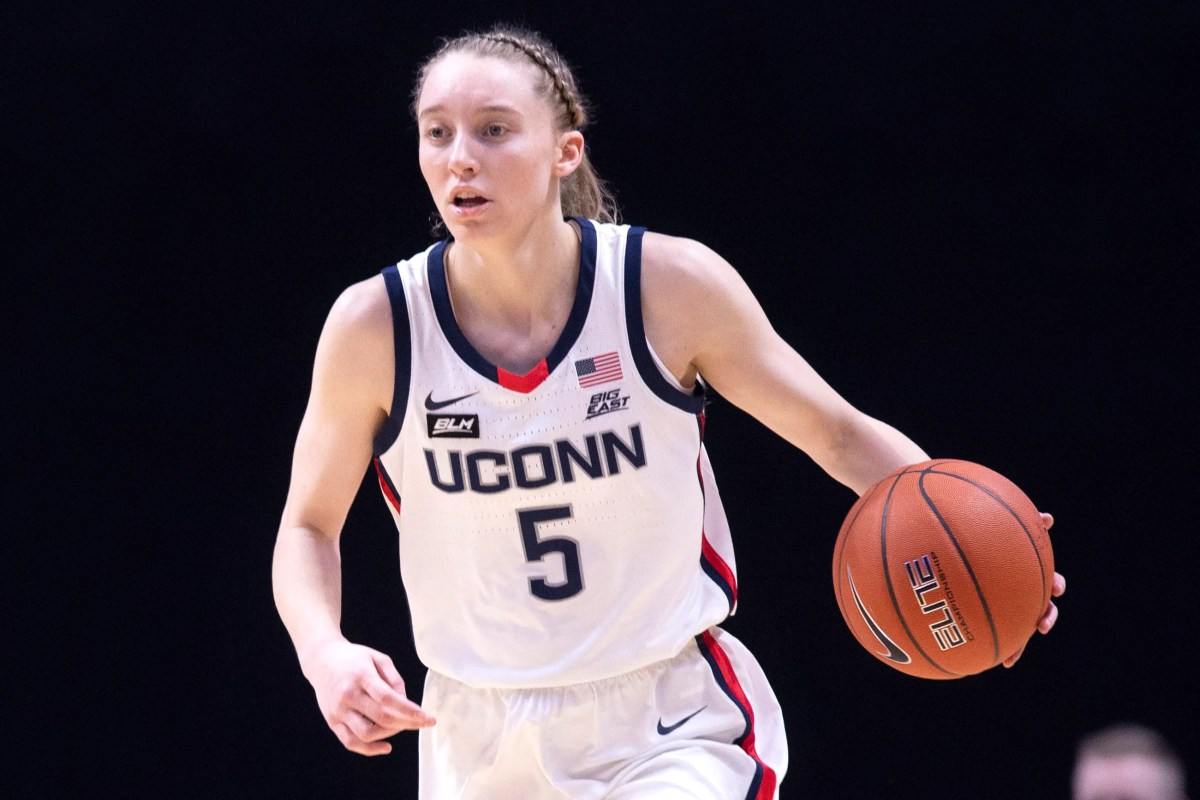
  1. Paige Bueckers

Assuming she comes out, Bueckers will be the number one pick. She is a premier shooter and great passer. Bueckers is a good defender, especially as a help defender. She can thrive on or off ball in the W at guard or wing. Would be nice if her  first step was a bit quicker and if she were able to get to the rim more often. Not sure she can drive a top 5 offense like Caitlin Clark, but she will be able to fit next to any superstar + role players combination. She will give her team maximum flexibility to build around going forward.

The most interesting aspect of Buecker’s future is will she accept playing for the Dallas Wings, or will she push for a preferred destination. I am anti-draft and would like to see a prominent college player use what leverage they have to get to their preferred team. But Bueckers may reasonably decide Dallas is fine. Let’s hope Dallas with Curt Miller gets their act together in that case.

  1. Olivia Miles

Miles may not have the same upside of a couple of players after her, but she’s the most likely to be a starter level W player of the rest. She’s probably not a 48% 3 point shooter on 4.4 attempts per game like she has been this season so far, but I do buy that her shot has improved to the point she will be able to play off ball some of the time. This is a big deal as Miles has great size and should be able to guard bigger guards and even the odd wing. This expands the kind of player one can put next to her. A bigger Jordin Canada is a very good player, with upside to be more than that.

  1. Dominique Malonga

Malonga is  6’6’ center who has the outlines of a do everything offensive force. At only 19, she is adept attacking professional opponents off the dribble. She is a willing screener who will roll hard to the rim. The percentages on her outside shot are not outstanding, 25% in Eurocup, but the shot looks decent and will likely be a part of her game going forward.

On defense she shows flashes of being able to switch onto smaller players. Her help defense needs a lot of work, but it seems like a combination of learning where to be and maybe even how she is coached. She may never be defensive player of the year, but at 6’6” with good mobility and length she should be more than good enough. 

Based on talent she has an argument to go as high as 2. Based on being French, she may not actually go until 7 or even later. French players have not traditionally shown up enough to be worth a high lottery pick, no matter how talented. Once you get to pick 8 and on though, a good player who shows up 2 seasons can be massively impactful, heck sometimes only one if they blossom like Leonnie Fiebich. 

  1. Kiki Iriafen

Iriafen might end up lower than this for me in the end. Thought of by some folks as the second best player in this draft, she has not developed in ways that give me confidence in what her role on offense would be as a starter on a good team. Of course she could enter the W and begin shooting 3s and playmaking a la Napheesa Collier, but Collier is an outlier in how her game has developed. Many examples of dynamite 6’2-6’3” bigs who were not able to make that jump to the W who couldn’t space the floor as a 4 nor were long enough to play center. 

If interested, look at Stephanie Mavunga’s stats at Ohio St and note she never averaged 10 minutes a game in her four seasons in the W. Mavunga was an excellent college player and has had a great career in Europe. The bar for making it in the W is just really high.

  1. Te-Hina Paopao

Similar to Olivia Miles in the high floor, but unlikely to becom an above average starter. A lack of first step and overall ability to get to the rim might hinder her ability to drive offense at the next level, but her shooting, decent size, and improved defense should help her find a role. The shooting is the main thing, as she is on year three of shooting over 40% from 3 on respectable volume. Her assist to turnover rato is good, if not great. A solid backup who can be a starter if paired with a ball dominant type.

  1. Sonia Citron

Drafting role players in the college to be role players in the W is a tricky game, as generally if you are not good enough to be one of your team’s primary offense drivers, you aren’t good enough to slot into a smaller role at the next level. Citron, however, I believe is worthy of drafting in the middle of the first round because she has shown in flashes the ability to provide more offense than a typical college 3 and D player, and she is flanked by two all-American guards who might each go in the lottery in their respective drafts in Olivia Miles and Hannah Hidalgo.

Citron is the exact archetype of a player W teams need and struggle to find. A wing who can defend 2s,3s and some 4s, and can shoot 3s. She is an acceptable shooter, not a deadeye shooter, but that is fine with the other skills she provides. A positive assist to turnover ratio and good block and steal rates show the well rounded player she is.

  1. Janiah Barker

Barker could explode and justify a top 3 pick at some point. But while her flashes as an elite athlete who can handle and pass well for her size have been there since her freshman season, the actual production has not shown up. She’s been good for UCLA this year, but does not start every game and is far from the driving force behind that team’s success. 

Barker could stay another year but she has talked in the past about wanting to leave for the W when possible. This would be a development pick, bet on future development pick of the type the W doesn’t generally do, but she is so talented it could happen.

  1. Georgia Amoore

Size is the thing keeping Amoore from going higher, and may cause her to slip into the middle or even end of the second round. And I understand that as there are a bevy of wings still available and if any of them learn to shoot, I’d likely take them over Amoore. But it is a crapshoot figuring out which of them will develop enough offense to play, whereas the pathway to Amoore being a competent backup and spot starter in the W is obvious. She is an amazing offensive player who will help prop up second units in scoring.

Hard to see her being good enough to overcome her limitations on defense as a full time starter, but with expansion coming I am hopeful more mostly offense players will get a chance and not as often guards who can’t shoot but can defend as mostly get roster spots now. The hiring of Karl Smesko and Lynn Roberts lean that way too, as Amoore seems like a perfect backup guard to have for a coach like Smesko. 

  1. Aneesah Morrow

Given time, I think Morrow might figure out the W enough to be a good backup big. Rebounding tends to translate, so she’ll be able to do that even at her size from the get go. Ridiculous steal rate and ok block rate gives hope.

I don’t think she’ll be able to translate to the wing permanently, which seems likely to be her path to starting. But I do think there’s a good chance she’ll be good enough at perimeter stuff to play off the bench in the W. Though the volume will have to be brought up at the next level, her shot looks good and does sometimes go in. 

  1. Bree Hall

A more extreme version of the concerns I mentioned about Citron, but like Citron, Hall is a wing who can guard at a WNBA level and hit open shots. Hall is the best shooter of possible three and D wings in this draft after Citron, but she has such a low usage rate. For now she is tenth on my board, since her low usage rate is a function of being on a very deep South Carolina team. She likely could dribble and do stuff on a different team that needed her to do more. Lexie Hull was a surprising pick, but has proven to be a fine pick. Hall could be similar.

Who might make a future edition?

Your wing of choice who hasn’t shown the ability to shoot 3s well enough yet mentioned in the Amoore section. One of these wings will likely make it: Shyanne Sellers, Sania Rivers, Lelia Phelia, Anastasiia Kosu (well unfortunately, not Kosuu1). But I have no idea which one will figure out her shooting enough to stick so I wouldn’t use a top 10 pick on any of them. Rori Harmon is the guard version of this group, with better passing and handling, but less positional value.

Ajša Sivka, the Slovenian wing, is so talented on offense and it might be worth taking a chance that her defense can be good enough to survive. But for now her defense keeps her firmly in the second round for me. Azzi Fudd seems likely to stay another year and I want to see a decent stretch of health, but if she declares she’d be somewhere on this list.

Others to watch: Angela Dugalić, Raven Johnson, Sarah Andrews, JJ Quinerley.

  1. Anastasiia Kosu has been playing up for years and holding her own. I first watched her when she was 15 and I believe a teammate of Arike Ogunbowale. She has played against more current W players than anyone else mentioned on this list. But with everything going on in Russia, we will unfortunately likely never get the chance to see of Kosuu can combine her athleticism and size with enough skill to thrive in the W. ↩︎

2022 WNBA Season Awards

MVP: Breanna Stewart

There are two candidates who both would be worthy winners of this award. A’ja Wilson very well may win as the best player on the #1 seed and would be a deserving winner. But for me, Stewart has been a bit better. Both had very efficient seasons, with nearly identical true shooting percentages, but Stewart was a hair better. Both players had positive assist to turnover numbers, but Stewart’s was better, 2.9 assists to 1.3 turnovers, with Wilson at 2.1 assists to 1.7 turnovers. They had identical free throw rates, something we typical think of as Wilson having an advantage at. 

Team success doesn’t provide much of distinction for me either way. Kelsey Plum is on my all-wnba first team with Jackie Young a strong candidate for second team, even if she didn’t end up on it for me. Jewell Loyd has had a down year for her. Seattle ends up fourth and Aces first, makes sense.

On defense both are leading candidates for defensive player of the year, so not much of an advantage there. This is one of the closest MVP races one can imagine. Team record does not matter to me beyond a sort of minimum level. Any of the teams in the top 5 of the league have won enough to have a candidate. 

All-in one stats have their limitations, especially the ones available to us in the W. But Stewart has the edge in whichever one you look at. Estimated Contribution’s WAR, Kevin Pelton’s WARP, , the WNBA’s own Player Impact Estimate , and even win shares. Plenty of issues with each of those, oh how I miss PIPM, and none of them are dispositive, but I do think it worth acknowledging when they all point in the same direction. If I had to bet money I would put it on A’ja winning at this point and I would be fine with that. She is an amazing player who I am lucky to get to watch, even if I chose Stewart for MVP.

DPOY: A’ja Wilson

Similar to MVP, this award comes down to Wilson vs. Stewart. I try not to let narratives influence who I pick for various awards, but it is possible I am giving this one to Wilson cause MVP went to Stewart. Just noting that, though I do think A’ja has been excellent defensively. Wilson had a heavier lift in keeping the Aces defense afloat than the other candidates. Dearica Hamby and Kia Stokes are good defenders, but neither are as good as Ezi Magbegor. Gabby Williams and Jewell Loyd are better than the respective Aces wing defenders. This does show in the overall team stats, the Aces are relatively low to have a DPOY winner, but the other teams win through a committee approach. Seattle with those mentioned, Washington with the three guards/wings all competing for first team all-defense, and Connecticut with Alyssa Thomas and Jonquel Jones.

A’ja isn’t quite on the level of switching out on the perimeter as Stewart, but Wilson is no slouch and she can better hold up against the bigger centers like Teaira McCowan than Stewart. Stewart forces more steals, but doesn’t provide the same level of rim protection. Wilson’s ability to play the five with more limited defensive players allows the Aces to play their best 5 players, whereas Seattle felt it necessary to swap out a good offensive player in Katie Lou Samuelson for Gabby Williams. Like MVP, if Stewart wins this I would be fine with it, I very nearly chose her, but A’ja has this for me.

6th Woman of the Year: Brionna Jones 

Brionna Jones played better than many starting bigs in the W, she just is behind two of the few who are better than her in Alyssa Thomas and Jonquel Jones. More interesting than winning this award for Jones is who she will be playing for next season. As an unrestricted free agent, the Sun will not be able to keep her without her taking a discount on what she could get. My vote is either Minnesota if they don’t get Aliyah Boston or Dallas.  Both of those places have players in Napheesa Collier and Satou Sabally who can stretch the floor at the 4 and let Jones do what she does in the paint.

Rookie of the Year: Rhyne Howard

Shooting 38% from 3 on nearly 8 attempts per game and blocking nearly a shot a game and getting 1.6 steals per game is the foundation of a player who can play a long time in the W. If that is all they do, every team can use wings who can defend and shoot. Howard can potentially do much more than that. A 2.8 to 1.6 assist to turnover ratio is very good for a rookie with a fairly heavy playmaking load. Especially on a Dream starved for offense at times, where Howard was regularly facing the other team’s best defender and at times double teams. 

As the season progressed Howard improved her ability to work her way to the rim and collapse the defense. That is a very good sign as to whether she can drive elite offense by herself or will need to be matched with another offensive dynamo to challenge for championships in time. Either way, a hugely successful season.

Most Improved Player: Jackie Young

The past few Aces playoff runs one of the open questions was whether Jackie Young would be able to play. Each time, a player who was both reluctant to shoot from 3 and inaccurate was played off the floor. That should no longer be an issue for this year’s Jackie Young. While she is likely not a 43% 3 point shooter now, even just 35% from 3 on 3.4 attempts per game is more than good enough to force teams to take her seriously. Young has always had the playmaking and the ability to get inside. The ability to space the floor for her teammates is an important step forward.

All-WNBA First Team

Breanna Strewart

A’ja Wilson

Candace Parker

Kelsey Plum

Skylar Diggins-Smith

All-WNBA Second Team

Alyssa Thomas

Sabrina Ionescu

Elena Delle-Donne

Jonquel Jones

Emma Meesseman

Final spot on the All-WNBA second team was the hardest award to figure out in this entire post. Meesseman got it for me for having an excellent season along with better defense than we’ve seen in the past. But both of her teammates Courtney Vandersloot and Kahleah Copper had good arguments. Jackie Young could have made it as well, but as good as finisher as she was she was fourth on the Aces team in terms of shot creation.

No Dallas Wings representatives for the 6th team is odd, but no obvious candidates jump out. Allisha Gray was the steadiest player and a bit more shot creation might have made it, but she excelled at playing off of Arike Ogunbowale or Teaira McCowan, who have defensive issues that kept them off for me. Ionescu isn’t a defensive whiz, but more consistently impactful than any of the Wings players.

All-Defense First Team:

Natasha Cloud -Guard

Ariel Atkins – Guard

Allisha Gray- Forward

Breanna Stewart – Forward

A’ja Wilson – Center

All-Defense Second Team

Brittney Sykes -Guard

Gabby Williams – Guard

Alysha Clark -Forward

Candace Parker – Forward

Jonquel Jones -Center

Cheating a bit by putting Clark at guard, but I could have put Clark there. Both of them guarded plenty of guards over the course of the season and both deserved to be on the team. Toughest omission was Alyssa Thomas. Over the course of the season may have been a better defender than Candace, but Candace’s peak in the games where she put forth maximum effort is higher. Jonquel is an impactful defender who uses her size to barricade the rim while being nimble enough to be ok in space. Her defensive rebounding is a plus as well. I said this on twitter, but the Jones vs. Thomas debate is a tough one and I am very prepared to be wrong. Defense is hard to measure.

Sylvia Fowles could have made it as she was still one of the best defenders in the league, but between games missed and the Lynx being near the bottom of the league in defense, I left her off. Kayla Thornton also had a good season and could have made it, but not quite over Clark or Parker. Thorton isn’t as good chasing perimeter players as Clark, nor does she provide rim protection like Parker.  Ezi Magbegor had a case, especially when she was starting and playing heavier minutes, but only so many spots.

All-Rookie Team

Rhyne Howard

NaLyssa Smith

Shakira Austin

Rebekah Gardner

Queen Egbo 

Apologies to Veronica Burton who ended strong but didn’t get enough playing time. Emily Engstler had a promising rookie season, but not better than her teammate Egbo. 

The Upside of NaLyssa Smith

NaLyssa Smith, the second overall pick of the Indiana Fever, is not having the level of success of the players picked either ahead or behind her, at least not yet. Rhyne Howard, the number one overall pick in the 2022 draft, was deservedly named to the All-Star game that just happened in Chicago. Shakira Austin, the third overall pick, is starting over two other players in Myisha Hines-Allen and Elizabeth Williams who are veterans who have started 239 games between the two of them. Both are having very impressive rookie seasons, to match anything recent rookies have done.

However, the story of a player’s career is not told in their first year in the league. Look at last year’s class, with Dana Evans having the best games from the class in 2022. Michaela Onyenwere, last year’s rookie of the year, has struggled to find playing time and her shot from both 2 and 3. 

NaLyssa Smith has shown enough to think she has a chance at being the best scorer player from this class, in time. NaLyssa Smith’s strength is her scoring versatility. She can both shoot 3s and pressure the rim. After a cold start, she is shooting a very respectable 35% from 3, though only 58%. While she is not going to be running off screens like Howard anytime soon, her ability to stretch the floor at the 4 and 5 is valuable. Austin has yet to make a 3 in her career.

Smith is able to put pressure on the rim from the perimeter in ways that Howard does not. Austin will use her speed against slower centers, but Smith has been able to at times beat even good 4 defenders. Howard is shooting a decent percentage at the rim, but hardly gets there. Though both Howard and Austin are good athletes, Smith walked into the league as one of the most explosive players, able to soar for rebounds. The Fever can continue to user her for alley oops to provide an unusual ability to put pressure on the rim, something only really Brianna Turner in Phoenix also does.

The table below shows how Smith is versatile compared to Howard and Austin. All 3 are effective for rookie, but Smith is the most balanced. Usage and 3 point stats three per Her Hoop Stats and % in the paint and % less than 5 feet per wnba.com/stats. Worth noting that shooting numbers by distance can be wonky, where does a layup count when the player took off 6 feet away but ended less than 5, but still interesting.

USG3 Pt%3PA/40% Point in the PaintShooting % less than 5 feet
Rhyne Howard23.8%36%8.722%60%
NaLyssa Smith22%35%3.649%61%
Shakira Austin18%0.167%68%

All three of these players will improve as they move forward, so the fact that Howard and Austin have been so effective and will keep getting better give them an advantage. However, going into the draft it was acknowledged that Smith was likely going to take a bit more time, as her transition to the W was potentially going to be trickier than Howard, who already had the dead eye shooting, or Austin, who was stepping into a veteran laden team with multiple quality veterans, including a former MVP. 

Smith is hampered by being on the youngest team with the fewest quality veterans around her. Kelsey Mitchell should have made the All-Star team and Victoria Vivians has had a good season, but other than those two the surrounding talent is not as strong as the Dream have, never mind the possible championship contender Mystics. Smith will look even better, assuming the Fever rebuild adds sufficient talent. Aliyah Boston next to Smith would be quite enjoyable, but even the size and shooting of Diamond Miller on the wing would be a solid addition.

The one area that Smith is well behind both Austin and Howard is in defense. While Smith competes and has shown the ability to move her feet in space against smaller defenders, she is not the level of help defender that the others are. Howard, a wing listed 2” shorter, blocks more shots and gets many more steals than Smith

As the Fever grow over the next few years, Smith has the tools to be the prototypical modern big on offense. Her size and speed means she can plat either 4 or 5 depending on the needs of the Fever and she should be able to help anchor a good playoff level offense in time.

WNBA Draft Board 2020

My first post on the WNBA. The goal with this blog is for there to be articles twice a week, Tuesdays and Fridays. Please follow me on twitter on the right to debate my rankings.

The WNBA draft is happening tomorrow night on ESPN. Thankfully they moved it off of ESPN 2. As we all deal with the coranivirus pandemic, I am looking forward to the draft more than I have ever looked forward to any sporting event that was not an actual playoff game. I am excited to see these players start their professional careers, hopefully in 2020.

This is a list of my personal ranking of the players and where they are likely to be in 4 or 5 years in the WNBA. This does not take into account team needs. I tend to think teams should draft in tiers, only taking into account team needs between somewhat similar players, so I have grouped players in tiers. Stats for 2019 season and height from herhoopstats. If anyone knows where to find players’ wingspans, let me know. Wingspan matters when projecting defensive ability. 

Tier 1: Potential Franchise players.

1. Sabrina Ionescue

5’10” guard, Oregon (51.8 FG / 39.2 3PT / 92.1 FT)

 While there is a chance Satou Sabally has a better career in the W, Sabrina is the real deal. Pick and roll dynamo who can shoot 3s off the dribble with good efficiency. Really impressed with her improved finishing at the rim, something that really stood out in Oregon’s win over Team USA. There are some questions on how she will handle teams switching athletic 3s and 4s onto her 1 on 1. Shooting should allow her to be valuable off ball. Decent size and fight to at least hold her own on defense. 

2. Satou Sabally

6’4” wing, Oregon (46.4 FG / 33.8 3PT / 79.2 FT)

Big wing is the most valuable position in basketball, as they are the hardest to find and impact winning in so many different ways. For recent WNBA champions, each was led by someone who played on offense as a big wing. Maya Moore, Candace Parker, Breanna Stewart and Elenna Delle Donne. Satou has all the tools and has shown the potential to be just this kind of franchise player. Good scorer at all levels, though more of an adequate 3 point shooter than a great one. 80% from the line is a good sign, as free throw shooting is more indicative of long term shooting ability than three point shooting. Fouls a fair amount and turns the ball over more than ideal, but both of those are paradoxically not bad signs for young players as both generally improve with experience. Not a liability defensively, though will be interesting to see whether she simply holds her own or is a plus in time on that end.

Tier 2: 1x or 2x all stars

3. Chennedy Carter

5’7” guard, Texas A&M (45.2 FG / 25.3 3PT / 72.9 FT) 

After big wing, the next most important position is shot creating guard, particularly one that can shoot from 3 off the dribble (see also, Sabrina Ionescu) This is a bet that Chennedy can be that kind of player. Is a better three point shooter than she showed this year, 35% over the course of her three years at Texas A & M. But she is a dynamic enough scorer she just needs to keep the defense honest with the 3, not be Allie Quigley. Undersized, can she guard other 2s or will she have to cross match with a bigger point guard. Or play point guard, which might be her best position long term. With W spacing and more talent around her, she certainly has the ability to be more of a passer and improve on her already pretty good 27% assist rate. Turns the ball over too much, though may be able to do less in the W than on a Texas A & M team that relied on her so much and raise her pedestrian 1.25 assist to turnover ratio.

Tier 3: Solid WNBA starters

4. Lauren Cox

6’4” big, Baylor (46.5 FG / 40.0 3PT / 62.5 FT)

Center is a position that it is hard to justify a high lottery pick with, unless the player can be an offensive hub a la Liz Cambage. Can she defend other 4s and shoot well enough to stretch the floor to play full time at the 4? There are competent centers who can finish at the rim and block shots to be had for relatively cheap in free agency and later in the draft. Look at the Sparks and how many centers they had last year. Lauren has some upside in this area of being a plus offensive player, if she improves her jumper and passing. Her floor is higher than many other players in this draft, but has less upside.

5. Bella Alarie

6’4” big/wing, Princeton (47.4 FG /35.6 3PT / 74.4 FT)

Alarie’s offense should translate. Good shooter, fluid ball handler for a big. Good shot blocker. Among the many losses of no March Madness this year is not seeing Alarie against better opponents, particularly on defense. She played well against Iowa, the best team Princeton faced this year, but more data points would have been great. Moves her feet well defending guards in space at the Ivy League, but may struggle in the W. Still, a lot of potential upside with her offensive ability and rim protection.

6. Kitija Laksa

6’0”, South Florida. (39.9 FG /38.2 3 PT / 96.5 FT)

Shooting shooting shooting. The WNBA is moving forward more and more with the realization that 3 > 2 each year. Seattle and Washington both one shooting the lights out, and Las Vegas showed the limits of talent and size overcoming a lack of shooting. Kitija Laksa is the best shooter in this class, when taking into account both volume and accuracy. Has some ball skills, isn’t just a stand still shooter. Decent size. Defense may not be a strength at first but has decent size. Allie Quigley but taller is a possibility. Needs to improve finishing and shooting in the paint.

Tier 4: Borderline starters, valuable backups

7. Ruthy Hebard

6’4” big, Oregon (68.5 FG / NA / 69.5 FT)

Being the third option on a loaded college team can create difficulties in projecting to the next level. Devin Booker the classic example from the men’s side of the game.  Hebard says she can shoot more than she has shown. Would be more valuable if she could even stretch out to 15 feet. Even without a shooting touch though, her elite efficiency at the rim stands out. Not the biggest center, but should be able to bang with bigger centers, a la Latoya Sanders. Not a back to the basket player, but given how much more efficient pick and roll is than posting up, used right could be a force. High to draft a center, but has a clearer path to effectiveness than players after this. 

8. Crystal Dangerfield

5’5” guard, UCONN (46.3 FG / 41.0 3PT / 86.0 FT)

Shoots and passes like a WNBA level point guard. Runs off screens well, knows how to set up bigger defenders and run them off of picks. Issues are size on defense and finishing over wnba length. Finishing an issue, though shows touch on floaters. Competes on defense and gets steals, but 5’5” is generous. Because of that, she is a floor raiser in the regular season and at worst a good back up point guard, but the question is if she is good enough to justify hiding her on defense, particularly in the playoffs when teams search out mismatches. 

9. Tyasha Harris

5’10” guard, South Carolina (42.6/38.4/85.7) 

Good at everything one wants from a point guard, but is she great at anything? Similar to Jasmine Thomas, at her peak. Career high 38% this past year from 3, up from 30% the prior 3 years. If that is real does provide the ability to play off ball. Is a good defender and has good size, could cross match and guard 2s to protect a smaller shooting guard teammate. Dangerfield has a longer history of shooting better. Harris has better assist numbers, but particularly this past year, much more dangerous teammates.  Basically a coin flip between the two with slight edge to Dangerfield’s ability to score off screens and be more dangerous on offense.

10. Megan Walker

6’0” wing, UCONN (47.7 FG /45.1 3PT / 82.1 FT)

    Similar to Laksa, her value will be shooting. But she took half as many attempts this past year as Laksa did in her most recent full NCAA season. Can she ramp up her shooting, especially off the dribble? Average at best athlete. Does she have the athleticism to hang on defense and attack off the dribble? May not be big enough to play more than spot minutes as a small ball 4, where UCONN played her quite a bit this past year. Though does fight and rebound fairly well at the 4.

11. Te’a Cooper

    5’8” guard, Baylor. (43.8 FG /41.5 3PT / 73.0 FT)

    Good defender against pgs, but may not have the size to defend bigger shooting guards. Good at the simple pass, but not an exceptional passer. Swing skill will be the 3 pointer, which was much improved this past year. Given average free throw shooting, might be closer to a low 30s three point shooter. Good burst, particularly in transition, but not a great finisher.

12. Beatrice Mompremier

Big 6’4”  (52.1 FG/ 30.8 3PtT / 70.5)

Has the potential to be an excellent center at the pro level. Will be helped if surrounded by shooting. Good shot blocker and rebounder. Too upright defending on the perimeter, gets blown by too easily. Could stand to improve finishing at the rim. Face up game only useful when she can use speed advantage, not much craft. Given that decent centers are easier to find,  taking a gamble on another wing might be a better use of draft pick in this range. 

Also receiving consideration:

Mikiah Herbert Harrigan big, South Carolina

Kiah Gillespie wing, Florida St.

Joyner Holmes big, Texas